
Key Takeaways
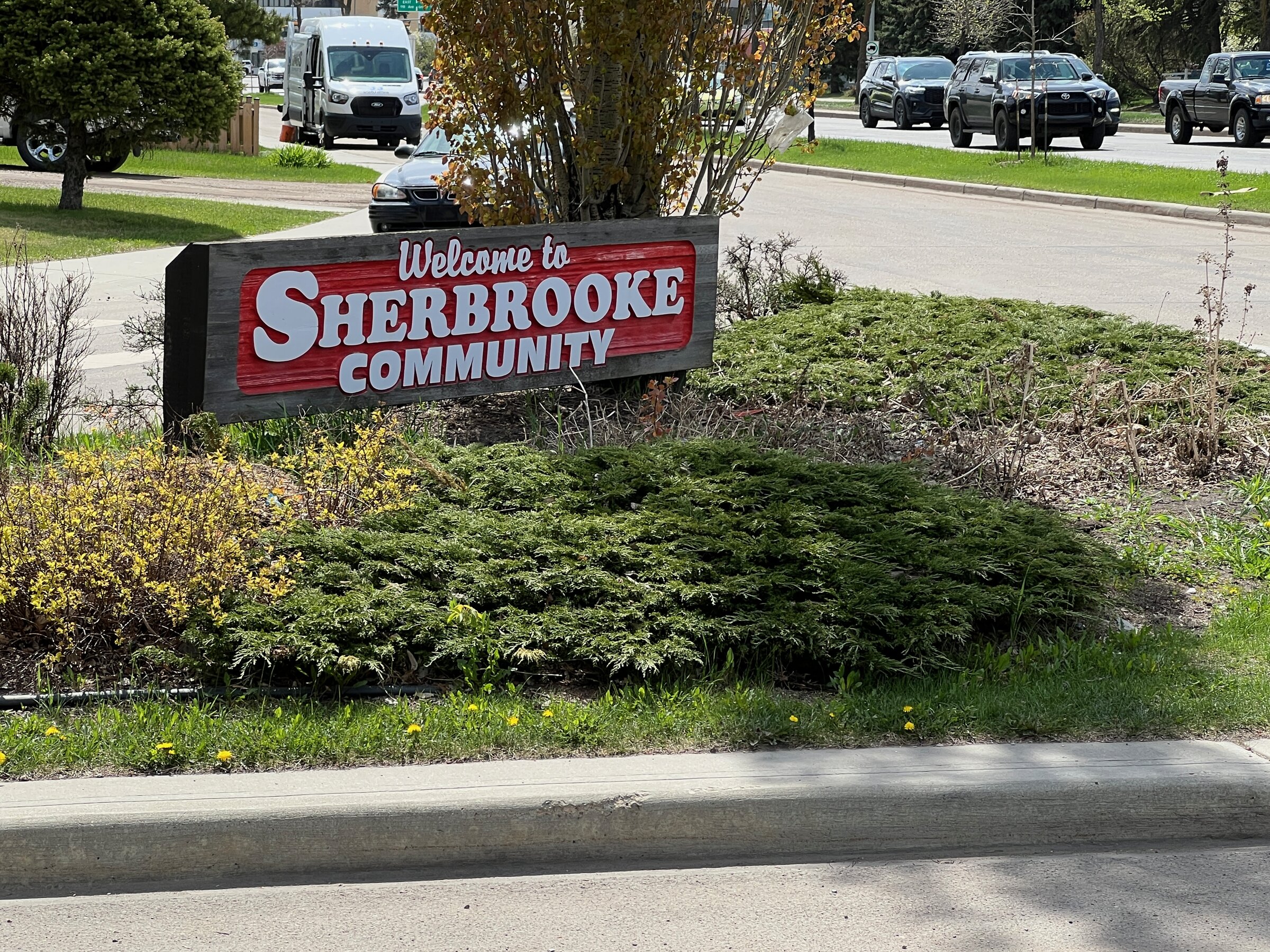
- Sherbrooke is a mature northwest Edmonton neighbourhood bounded by Yellowhead Trail on the north, 118 Avenue on the south, 127 Street on the east, and St. Albert Trail on the west.
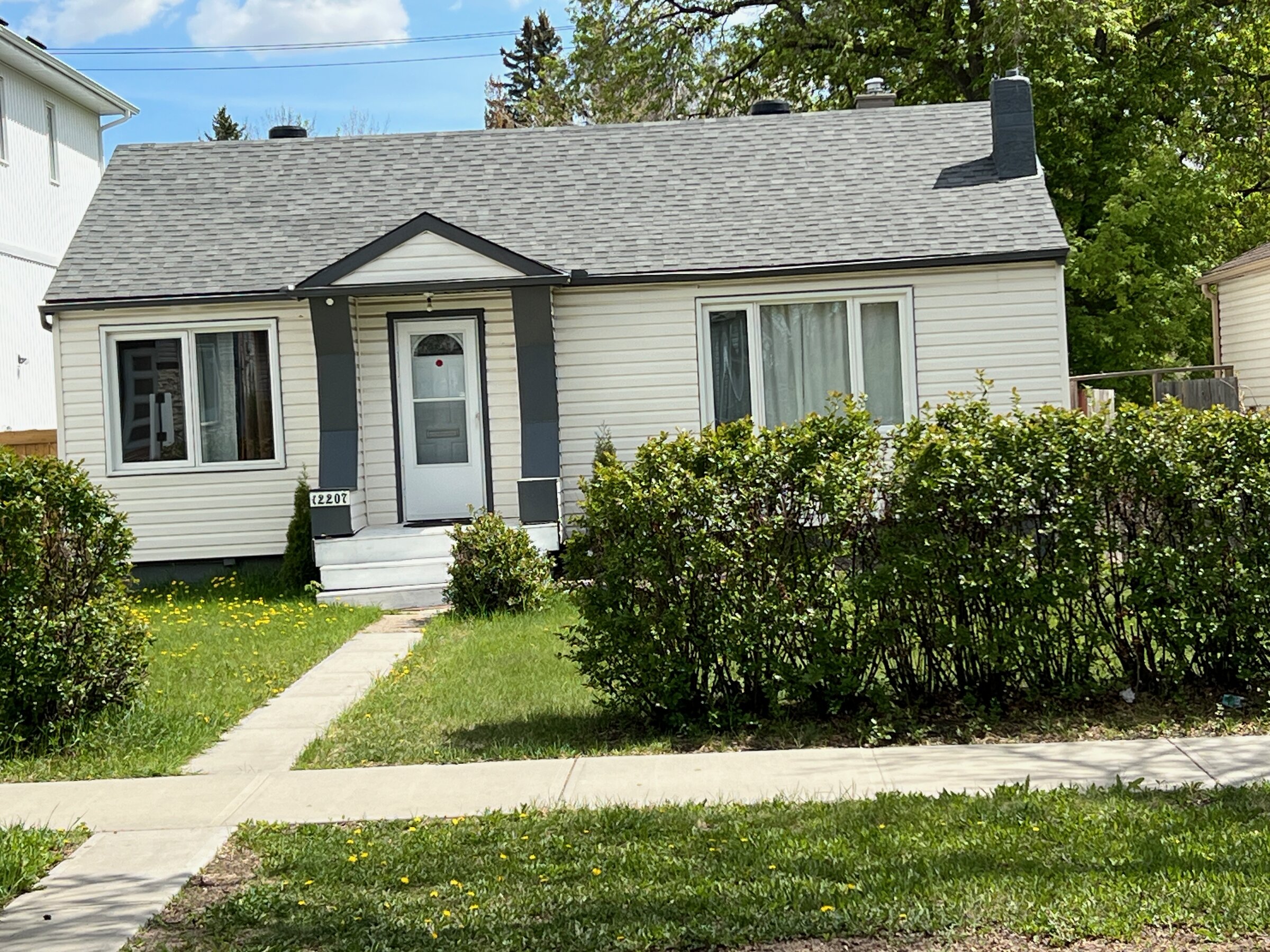
- The majority of Sherbrooke was built between 1946 and 1960, so most homes are single-detached 1950s post-war bungalows on rear-lane lots.
- Detached original-stock bungalows typically sit in the $280K to $420K range; renovated bungalows run roughly $380K to $500K. Confirm current pricing with Rory before you write an offer.
- Sherbrooke is one of the more affordable detached pockets in the mature northwest, trading amenity density and prestige for price and a quiet interior grid.
- NAIT is 6 to 12 minutes away and downtown is 12 to 20 minutes off-peak; the neighbourhood is bus-served, with no LRT station inside it.
- This is the Edmonton neighbourhood of Sherbrooke, not the city of Sherbrooke in Quebec; the two share only a name.
Homes for sale in Sherbrooke
 Courtesy of Cory V Clendenning, Royal LePage Noralta Real Estate$550,00012348 128 ST NW3 bd · 2 full ba · 1,012 sq ft · MLS® # E4501988
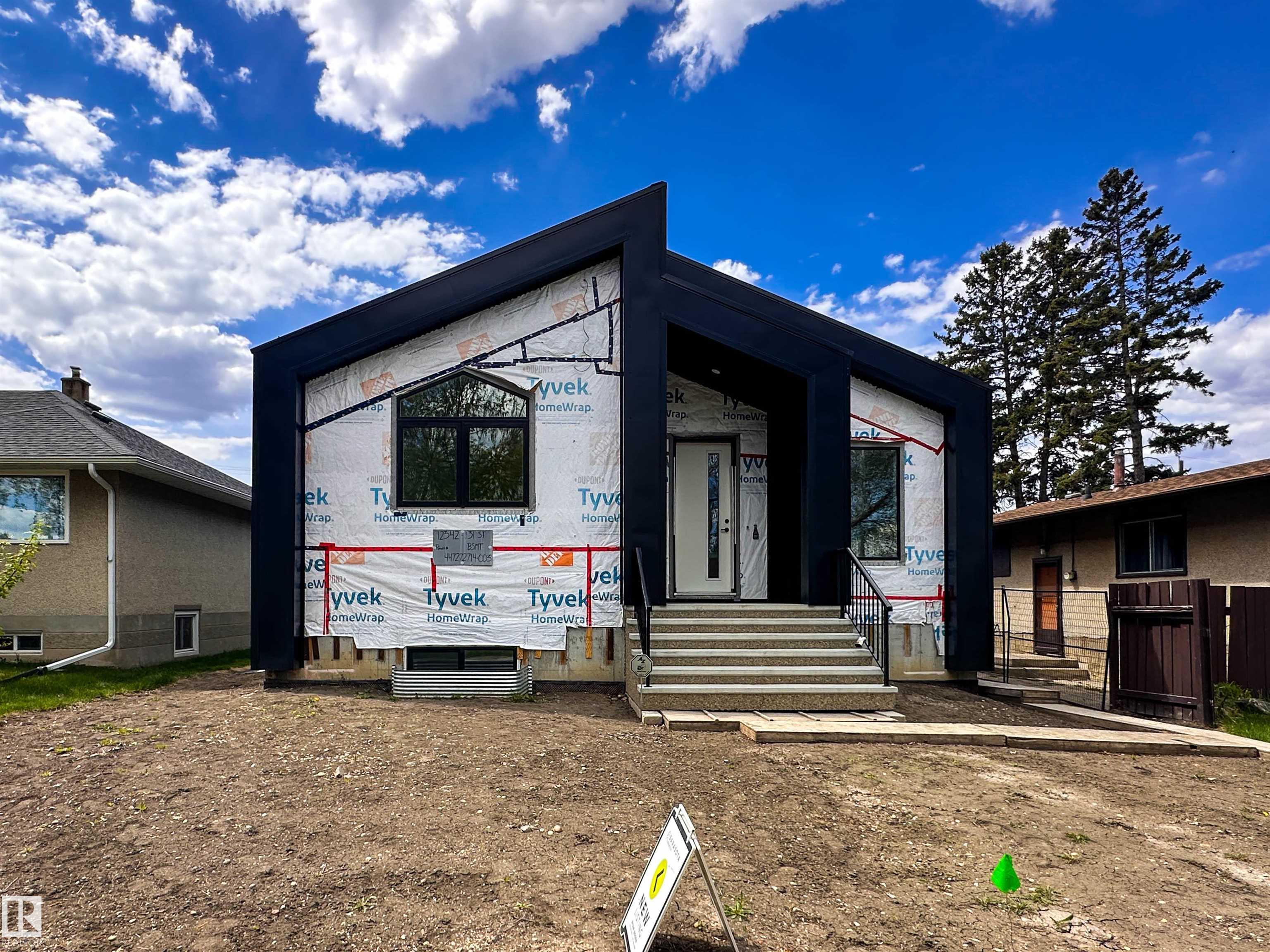 Courtesy of Brooke A Sagert & Ryan J Boser, Sarasota Realty$1,137,00012342 131 ST NW6 bd · 4 full ba · 1,620 sq ft · MLS® # E4489485
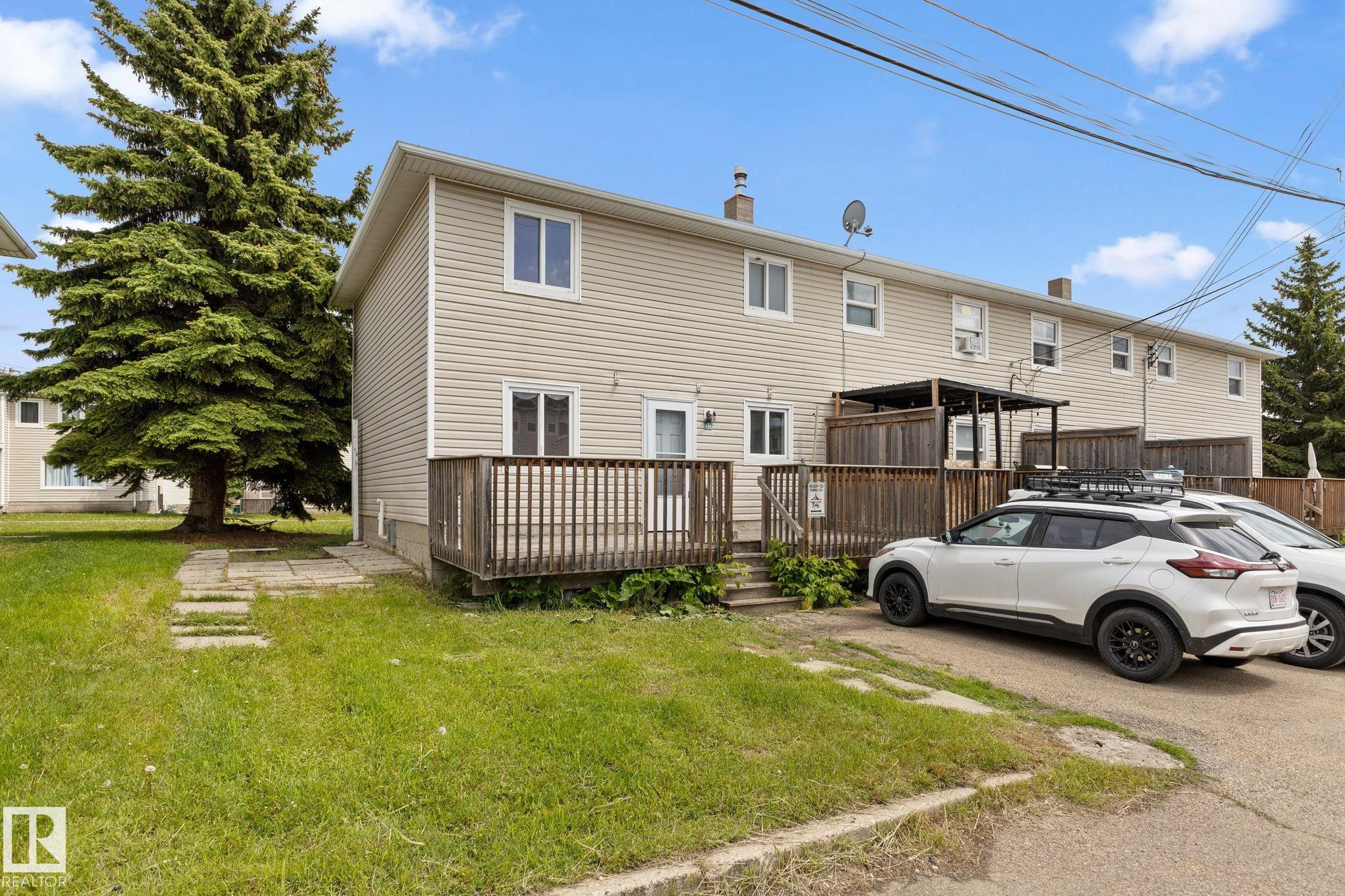 Courtesy of Ted Tecle, Sterling Real Estate$199,900#110 12988 122B AV NW4 bd · 1 full, 1 half ba · 1,001 sq ft · MLS® # E4494899
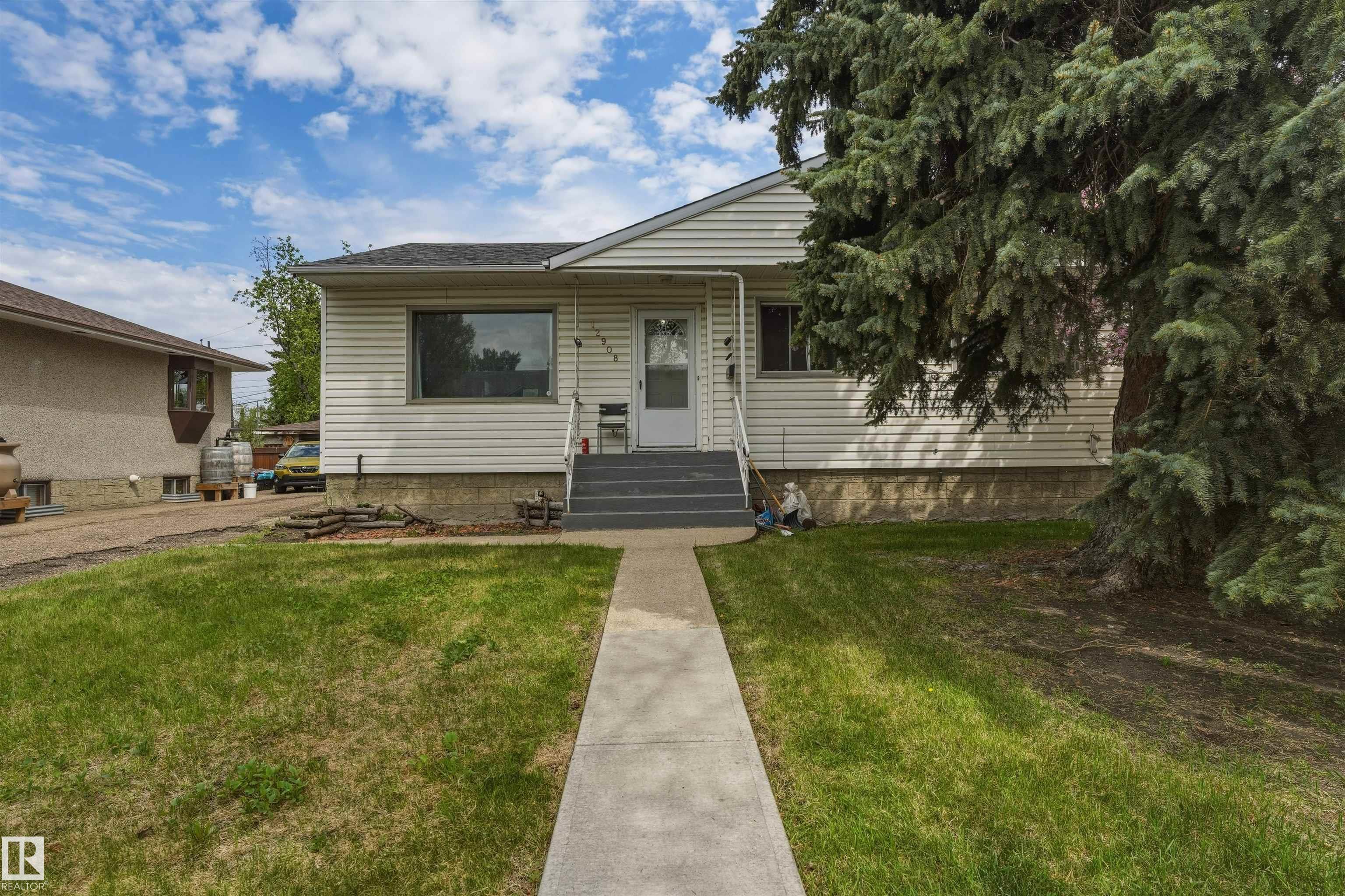 Courtesy of Renee Degenhardt & Isaac I Kristensen, LPT Realty$399,00012908 120 AV NW4 bd · 2 full ba · 1,340 sq ft · MLS® # E4490309
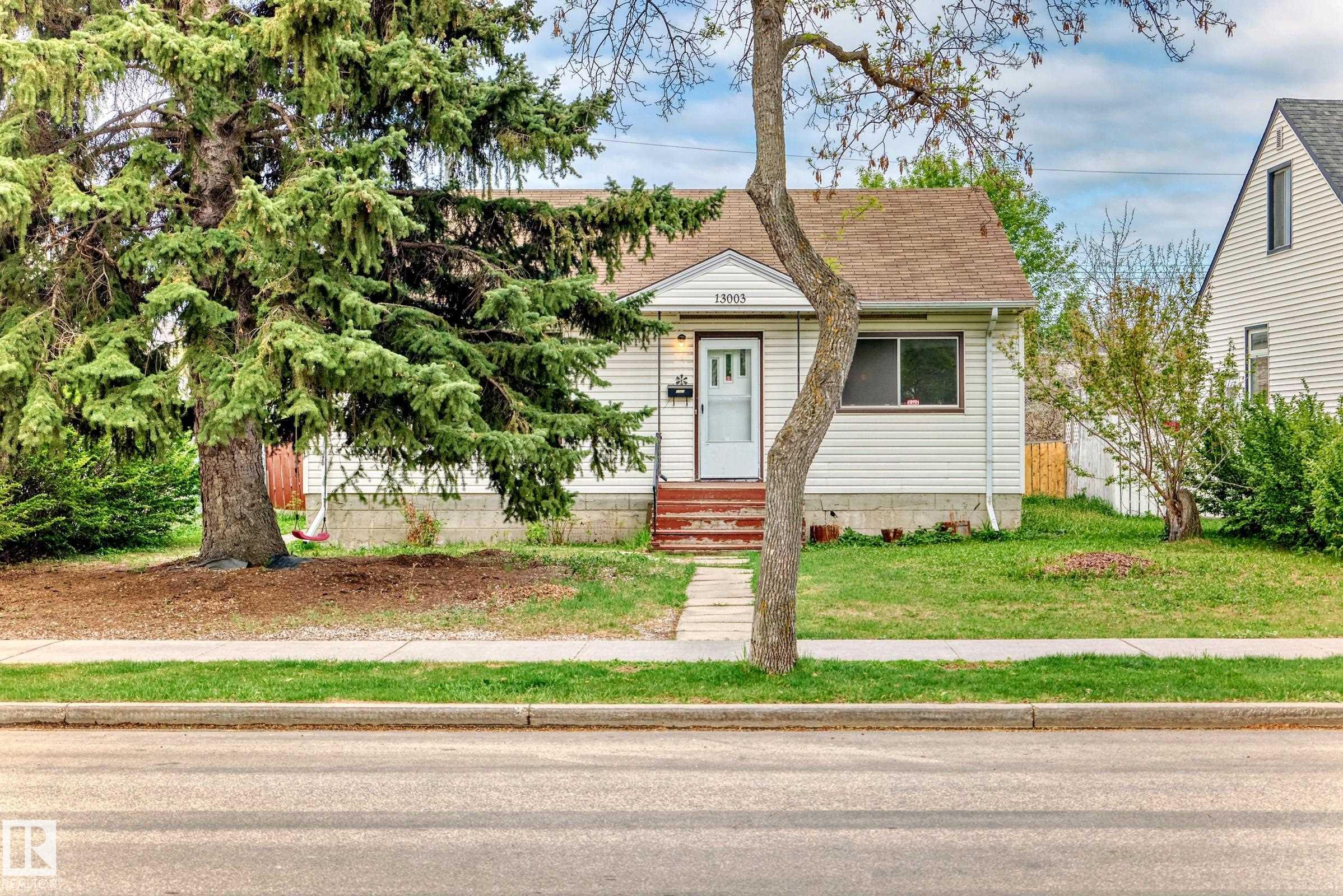 Courtesy of Wendy M Lam, RE/MAX Elite$325,00013003 Sherbrooke AV NW5 bd · 2 full ba · 1,022 sq ft · MLS® # E4486128
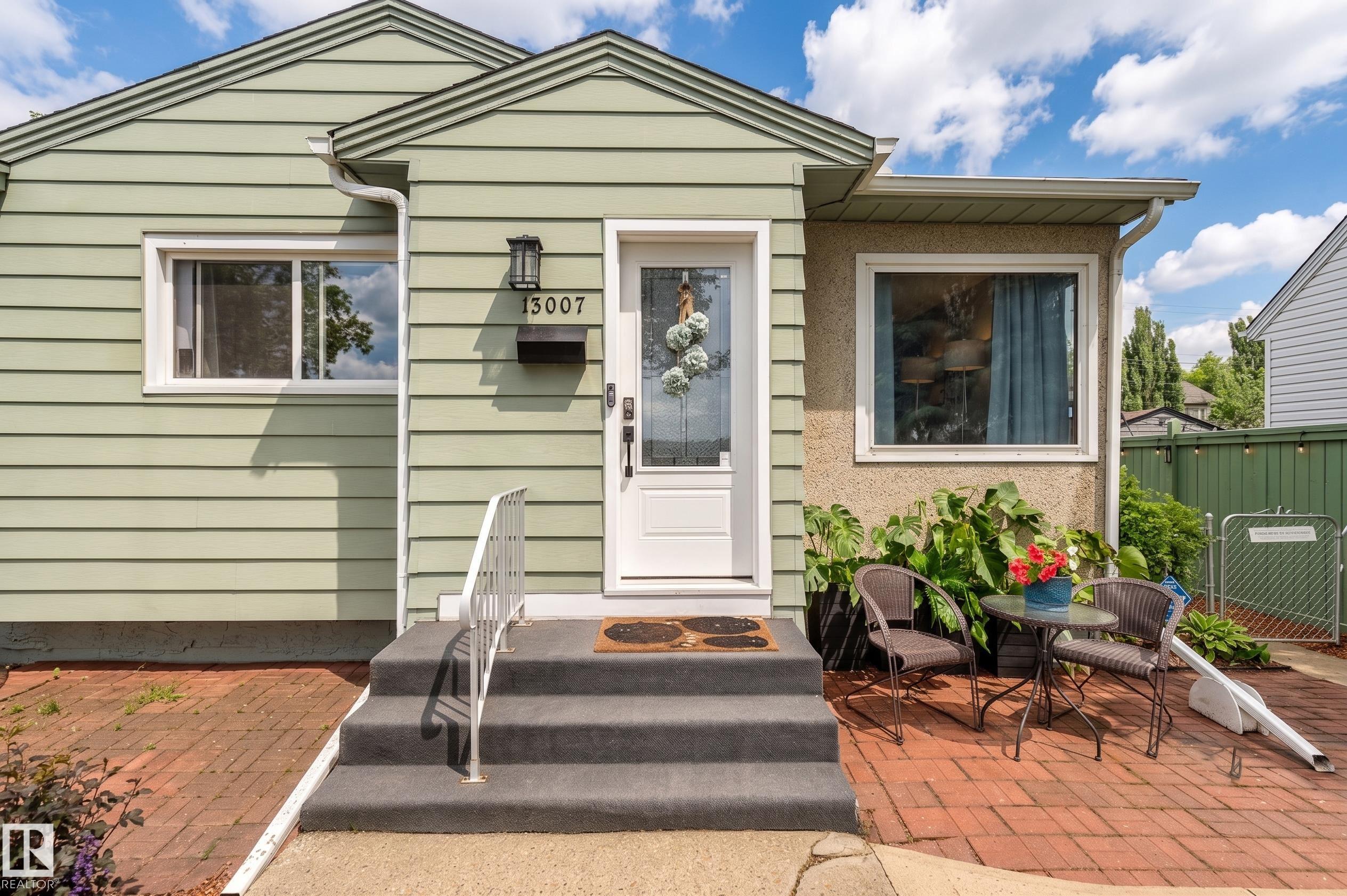 Courtesy of Bernie A Krec, Royal Lepage Arteam Realty$429,90013007 124 AV NW5 bd · 2 full ba · 985 sq ft · MLS® # E4496155
If you’re looking at homes for sale in Sherbrooke, Edmonton, the short version is this: it’s a quiet, affordable grid of 1950s bungalows in the mature northwest, tucked south of Yellowhead Trail between St. Albert Trail and 127 Street. I’m Rory O’Shea, REALTOR® with Homes & Gardens Real Estate Ltd., working alongside Bev O’Shea-Thomas. This page walks you through where Sherbrooke sits, what the houses cost, what schools and amenities you draw, how the commute works, and how it stacks up against the neighbours.
Where is Sherbrooke in Edmonton?
Worth knowing if the name throws you: this is the Edmonton neighbourhood of Sherbrooke, not the city of Sherbrooke in Quebec. The Quebec city has about 170,000 people. Edmonton’s Sherbrooke is a single mature neighbourhood of roughly 2,400 residents (City of Edmonton 2012 Municipal Census). Same name, completely different place.
Sherbrooke sits in northwest Edmonton, well inside Anthony Henday Drive. The boundaries are clean and easy to picture: Yellowhead Trail on the north, 118 Avenue on the south, 127 Street on the east (separating it from Prince Charles), and St. Albert Trail on the west. Inglewood sits south across 118 Avenue, and the Coronation Park area is a short drive southeast.
Realtors and buyers usually file Sherbrooke under the northwest Edmonton search corridor, alongside Prince Charles, Dovercourt, Athlone, and Calder. That is how most people shop it: as one of the affordable mature-northwest bungalow pockets, cross-shopped with its post-war siblings.
What’s the price range for homes in Sherbrooke, Edmonton?
Here’s the trade-off: Sherbrooke gives you a detached bungalow at one of the lower entry points in the mature northwest. The same kind of post-war bungalow that runs higher in Inglewood or North Glenora tends to land lower here, and the gap is real on the original-stock detached pool.
Working price bands over the trailing twelve months by product type:
- Post-war bungalow (1946 to 1960), original or lightly updated: typically $280K to $420K depending on condition, lot, and street.
- Post-war bungalow, renovated: typically $380K to $500K.
- 1960s back-split: typically $360K to $480K.
- Modern infill (occasional, when it comes up): typically $520K to $720K.
- Row house and townhouse: thin sales volume; usually $220K to $340K.
- Walk-up apartment: typically $120K to $220K, mostly on the St. Albert Trail and 118 Avenue frontages.
Across the detached pool, the 25th to 75th percentile range works out to roughly $300K to $470K, which captures most of what you’ll see in showings. One quirk worth pricing in: interior-street homes carry a premium over properties fronting the arterials and the industrial edge. These are estimates; contact Rory for a current CMA on a specific property.
What’s it like to live in Sherbrooke?
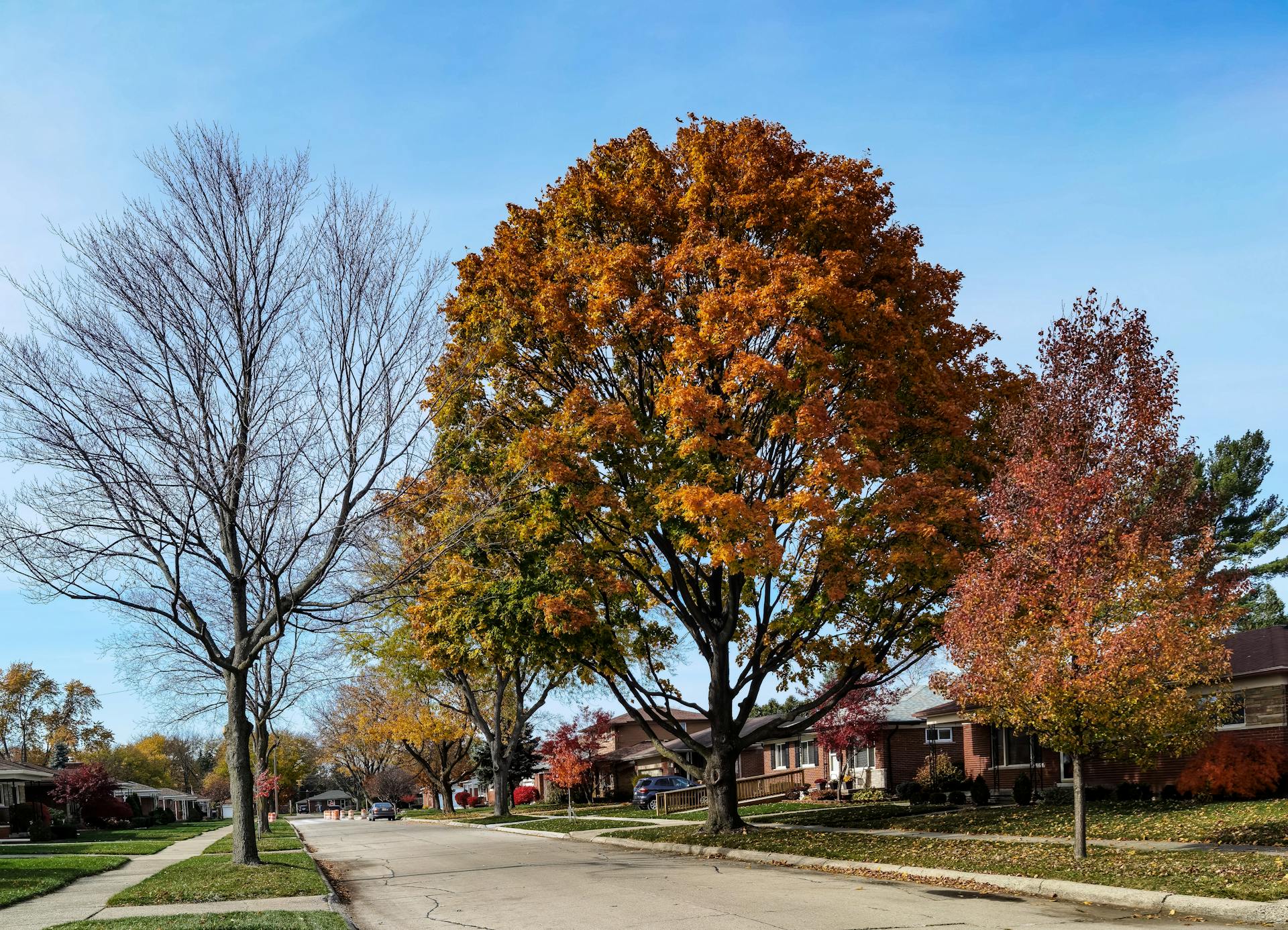
Honest answer: Sherbrooke reads like a textbook post-war Edmonton bungalow neighbourhood, and that consistency is the appeal. Most homes here are 1950s single-detached bungalows on rear-lane lots, with mature trees on the interior streets and a quiet residential rhythm a few blocks deep from any arterial. The streetscape is more uniform than Inglewood’s mixed pre-war and post-war blocks, and closer in feel to North Glenora.
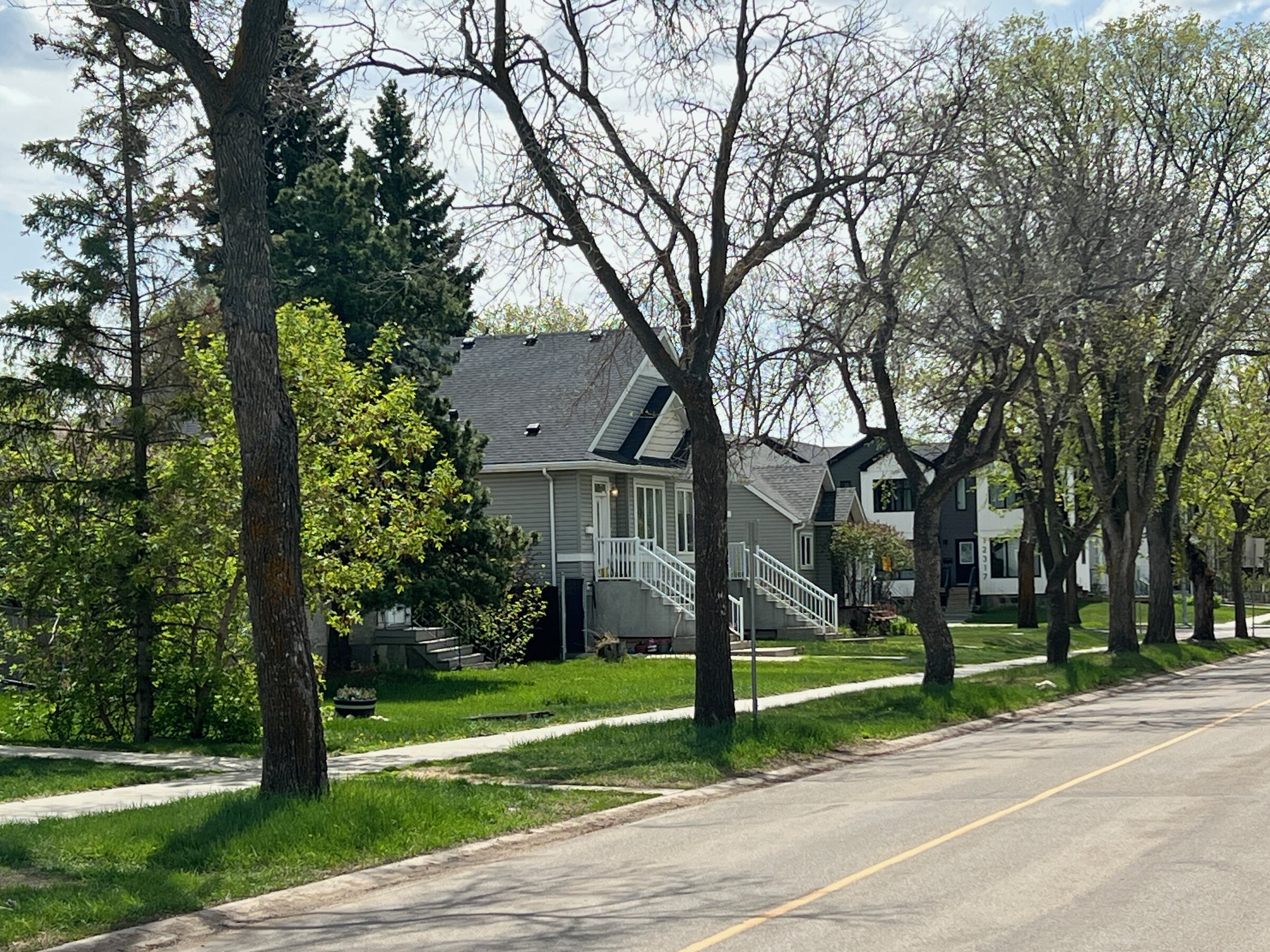
The catch is the edges. Sherbrooke is boxed in on three sides: Yellowhead Trail on the north, St. Albert Trail and an industrial belt on the west, and the 118 Avenue corridor on the south. Properties fronting or backing those edges have a different noise profile than the interior. Most buyers I’d show here set their sights on interior streets early, and the price gap to an interior block is usually smaller than the lifestyle gap.
What amenities are near Sherbrooke?
Don’t expect a grocery store inside the neighbourhood. What you get instead is quick access to the St. Albert Trail commercial strip on the west edge, which carries grocery, big-box, auto, and quick-service retail within a short drive of every Sherbrooke address. Westmount Centre is a few minutes south for a fuller shopping run.
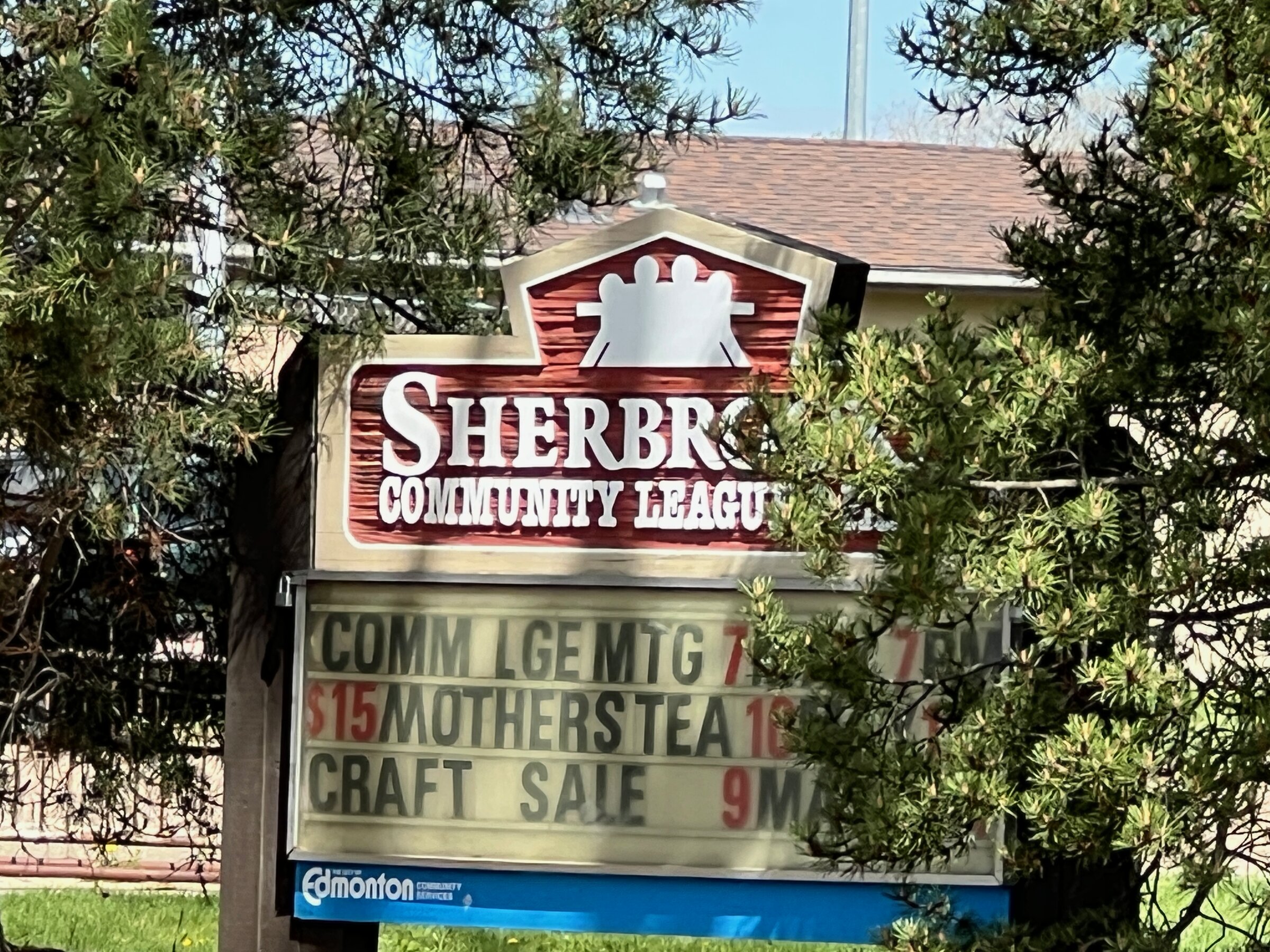
Inside the neighbourhood, the Sherbrooke Community League runs a hall and outdoor rink at 130 Street and 122 Avenue, and has since the league formed in 1948. That rink is the kind of small, local anchor that does not show up on a competitor’s templated page. Coronation Park sits a short drive southeast, with the Peter Hemingway Fitness and Leisure Centre and TELUS World of Science. For healthcare, the Royal Alexandra Hospital is 8 to 15 minutes south at 111 Avenue and Kingsway. Check current hours and operators before you build a routine around any specific business.
What schools serve Sherbrooke?
If you’re moving for the schools, read this part twice, because the in-neighbourhood school is not the standard public catchment school. Aurora Charter School (K to 9) sits inside Sherbrooke, in the building that used to be Sherbrooke School under Edmonton Public Schools. Aurora is a charter school, which means it admits by application across a wide draw rather than by your home address. So having a school down the street does not mean your child is automatically enrolled there. Confirm your designated Edmonton Public catchment on epsb.ca before you bank on it.
Edmonton Catholic Schools (ECSD). St. Pius X Catholic Elementary School (K to 6) serves the neighbourhood; verify the current grade configuration and catchment on ecsd.net.
High school. Ross Sheppard High School has historically served much of the mature inner west and northwest, and hosts the IB Diploma Programme. Catchment boundaries shift, so confirm your block on epsb.ca.
Francophone. No francophone school sits in Sherbrooke; the closest catchments draw to schools like École Gabrielle-Roy or École Père-Lacombe.
Fraser Institute rankings circulate widely. The methodology does not capture school culture, special needs support, or program diversity, so treat them as one data point among many.
How long is the commute from Sherbrooke to downtown?
Most people don’t realize how close Sherbrooke sits to NAIT and the Royal Alex. Off-peak, you’re typically looking at 12 to 20 minutes downtown via St. Albert Trail and 118 Avenue, or via Princess Elizabeth Avenue.
Sherbrooke itself is bus-served, with no LRT station inside it. The closest LRT is the Metro Line terminus at NAIT, a short drive southeast. St. Albert Trail and Yellowhead Trail give you fast access to the rest of the region, which is a big part of why commuters like the location.
Other typical drive times, off-peak:
- NAIT (the Metro Line LRT terminus): 6 to 12 minutes.
- University of Alberta (main campus): 16 to 24 minutes via Groat Road and Saskatchewan Drive.
- St. Albert: 8 to 15 minutes north on St. Albert Trail.
- West Edmonton Mall: 12 to 20 minutes via Yellowhead Trail and 156 Street.
- Edmonton International Airport: 35 to 50 minutes via the QEII.
One thing to track before you commit to a property on the north edge: the City of Edmonton is converting Yellowhead Trail to a free-flow freeway in stages. It is a long-run commute win and a short-run construction reality, depending on timing.
Who’s buying in Sherbrooke right now?
If your budget is under $300K, you’re at the entry of the bungalow band or on the condo and row-house side along the frontages. Most detached activity sits a bit above that. Five buyer types show up here reasonably consistently.
- First-time buyer after an entry-priced original or lightly updated 1950s bungalow, often a renter from elsewhere in the northwest or central Edmonton priced out of Inglewood or North Glenora.
- Renovation buyer taking on an original bungalow with a budget for the work. The uniform post-war stock makes the scope and the comparable sales predictable.
- Move-up family from a northwest rental or a starter condo, wanting a detached home and a yard at a price below the inner-west neighbourhoods.
- Downsizer or long-tenure owner rolling out of a bungalow held for decades, often as an estate sale.
- Investor or small landlord targeting the row-house and walk-up product and the cash-flow bungalows on the frontages.
The common thread is value. Sherbrooke buyers are usually choosing the cheapest detached entry in the mature northwest over amenity density.
What new development is happening in Sherbrooke?
Slow and steady, well below the infill pace in Inglewood or Westmount. Sherbrooke gets occasional single-lot redevelopment, but the original bungalow grid is still overwhelmingly intact. The 2024 City of Edmonton Zoning Bylaw renewal expanded the small-scale residential category city-wide, so expect a measured uptick in single-lot infill over the medium term rather than a wave.
Worth knowing if you’re tracking the area: the Yellowhead Trail freeway conversion is the larger north-edge story. The work affects traffic, noise, and access on the northernmost Sherbrooke blocks while it is underway. If you want hard numbers on recent permits for a specific block, pull the current building-permit counts from the City of Edmonton open data portal before you commit.
What should buyers know before buying an older Sherbrooke home?
Honest answer: more than you’d expect if you’ve only bought newer. Sherbrooke is a 1950s bungalow neighbourhood, and pre-1965 homes come with a checklist. A standard pre-purchase inspection handles most of it; you just need to know what to ask the inspector to look at closely.
- Older systems. Original electrical panels, older plumbing, and dated furnaces are common on the original stock. Knob-and-tube is rarer here than in pre-war neighbourhoods given the post-war build window, but verify before you firm up financing.
- Original foundations. Look for moisture management evidence: weeping tile age, sump pump presence, basement floor cracking.
- Asbestos and lead paint. Common in original finishes and insulation on homes this age. Not deal-killers; budget line items.
- The three edges. Confirm the noise and air profile on any property fronting Yellowhead Trail, St. Albert Trail, the industrial belt, or 118 Avenue. Interior streets are quiet; the edges are not.
- Dutch elm bylaw. Sherbrooke sits within the City of Edmonton elm protection area, with a no-pruning window that typically runs April through September. Verify the current bylaw before any major tree work.
None of this is a reason to walk. These bungalows are buyable, livable, and often already renovated. They just take a more careful inspection than a 2010-era house in the suburbs.
How does Sherbrooke compare to Prince Charles and the inner northwest?
This is the comparison I have at most kitchen tables out here. If you’re weighing Sherbrooke against the alternatives, here is how the close substitutes stack up.
- Prince Charles (closest substitute). East across 127 Street. Almost the same post-war bungalow stock, similar price band, similar quiet interior. If Sherbrooke inventory is thin, this is the first place to look, and the reverse is just as true.
- Dovercourt (lateral sibling). North, near the Yellowhead corridor. Comparable post-war stock and affordability.
- Athlone and Calder (step-down on price). North and northwest. Comparable or slightly lower price tier, comparable post-war stock, similar arterial and rail exposure.
- North Glenora (step-up on amenity). Southeast across the Coronation Park belt. More cohesive streetscape, Coronation Park access, a higher price band.
- Inglewood (step-up on amenity and variety). South across 118 Avenue. More architectural variety, 118 Avenue corridor proximity, a higher price tier on equivalent detached product. The natural upsizing target for a Sherbrooke buyer with equity.
Step-up two tiers. Glenora. Heavier pre-war character, larger lots, prestige school cohort. If your budget pushes well past the Sherbrooke band and you want a character home, that is the page to read next.
About the Author
Rory O’Shea is a REALTOR® with Homes & Gardens Real Estate Ltd. in Edmonton. He covers the full residential market, from apartment condos starting at $200K through detached homes to $1.2M+, across Edmonton and 11 surrounding municipalities. Rory works alongside Bev O’Shea-Thomas, a 45+ year Edmonton REALTOR® and Re/Max Hall of Fame member who provides advisory support. Reach Rory at 780-220-4490 or rory@edmontoncityhomes.com. Homes & Gardens Real Estate Ltd., 3659 99 St NW, Edmonton, AB T6E 6K5.
Market figures shown as ranges; actual prices depend on home size, condition, and exact location. For a current CMA on a specific property, contact us. Listing data is provided through the REALTORS® Association of Edmonton MLS® System and is believed reliable but not guaranteed. Verify current status with your REALTOR®.
Talk to Rory
If you’re looking at homes for sale in Sherbrooke, Edmonton and want a working view of what’s available, what’s about to come up, and where the value sits across the original-stock and renovated bungalow pools, I’m happy to talk. I can run a current CMA on a specific Sherbrooke address, confirm the Edmonton Public catchment for your block, or compare Sherbrooke side-by-side with Prince Charles, Inglewood, or North Glenora before you commit. Call or text me at 780-220-4490, email rory@edmontoncityhomes.com, or use the contact page to send a brief. Learn more about Rory and Bev.
About this page
This page was researched and drafted with AI assistance to gather and synthesize public data from the Realtors Association of Edmonton, Statistics Canada, CMHC, and the City of Edmonton. Local market commentary and neighbourhood observations reflect the direct experience of Rory O’Shea and Bev O’Shea-Thomas working this market — Bev’s 45+ years of Edmonton real estate experience and Rory’s front-line transaction work. Every figure, claim, and recommendation was reviewed and signed off by Rory before publishing.
Last reviewed: May 29, 2026