
Key Takeaways
- Inglewood, Edmonton sits north of Westmount across 118 Avenue and is a separate place from Calgary’s better-known Inglewood; do not confuse the two.
- The housing mix is genuinely trimodal: pre-war character one-and-a-half-storeys (1910 to 1940), post-war bungalows (1945 to 1965), and modern infill (2012 onward).
- Detached original-stock typically sits in the $340K to $620K range depending on era and condition; modern infill runs roughly $560K to $820K. Confirm current pricing with Rory before you write an offer.
- The Inglewood Community League, founded 1928, runs the rink, hall, and programs out of its 120 Avenue location and is one of the more active community leagues in mature inner Edmonton.
- Ross Sheppard High School with its IB Diploma Programme serves the catchment; Inglewood School (K to 9) sits in the neighbourhood at 12515 116 Street.
- Off-peak commute to downtown is 9 to 16 minutes via 124 Street and 107 Avenue or via Kingsway; NAIT is 5 to 10 minutes away.
Homes for sale in Inglewood
 Courtesy of Peter Chen, MaxWell Polaris$899,90011230 125 ST NW7 bd · 4 full, 1 half ba · 1,808 sq ft · MLS® # E4502008
 Courtesy of Che Taylor, MaxWell Challenge Realty$145,000#304 11511 130 ST NW2 bd · 2 full ba · 842 sq ft · MLS® # E4501528
 Courtesy of Darlene Strang & Alexander R Cote, RE/MAX Real Estate$424,90011502 127 ST NW4 bd · 2 full ba · 885 sq ft · MLS® # E4501386
 Courtesy of Julie Mateer, Bermont Realty (1983) Ltd$399,90011515 125 ST NW3 bd · 2 full, 1 half ba · 1,409 sq ft · MLS® # E4501409
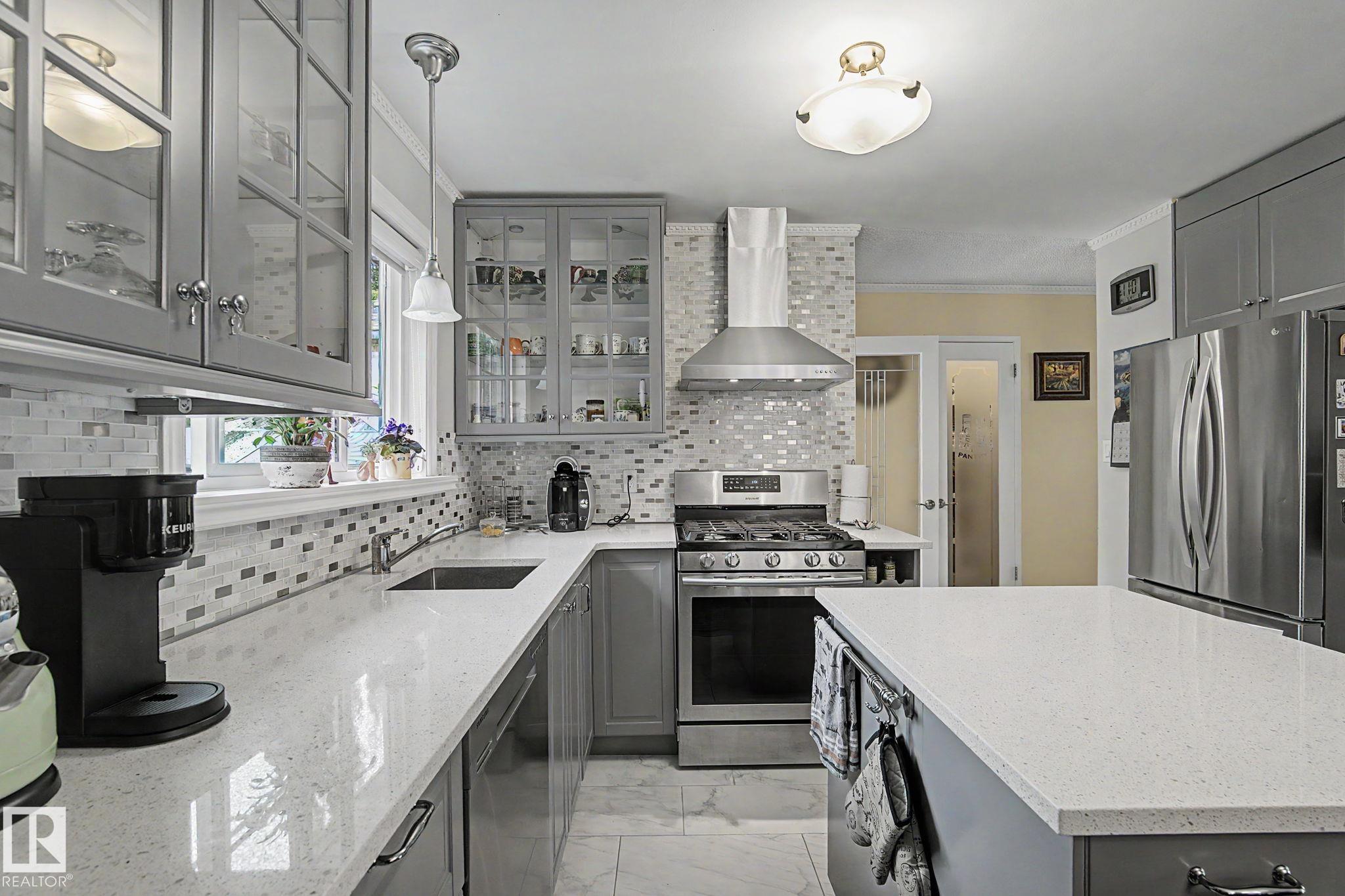 Courtesy of Jesse D Maclean, Century 21 Masters$469,50011638 123 ST NW NW4 bd · 2 full, 1 half ba · 1,152 sq ft · MLS® # E4500919
 Courtesy of Clare Packer, RE/MAX Excellence$549,90011226 122 ST NW5 bd · 3 full, 1 half ba · 1,753 sq ft · MLS® # E4500415
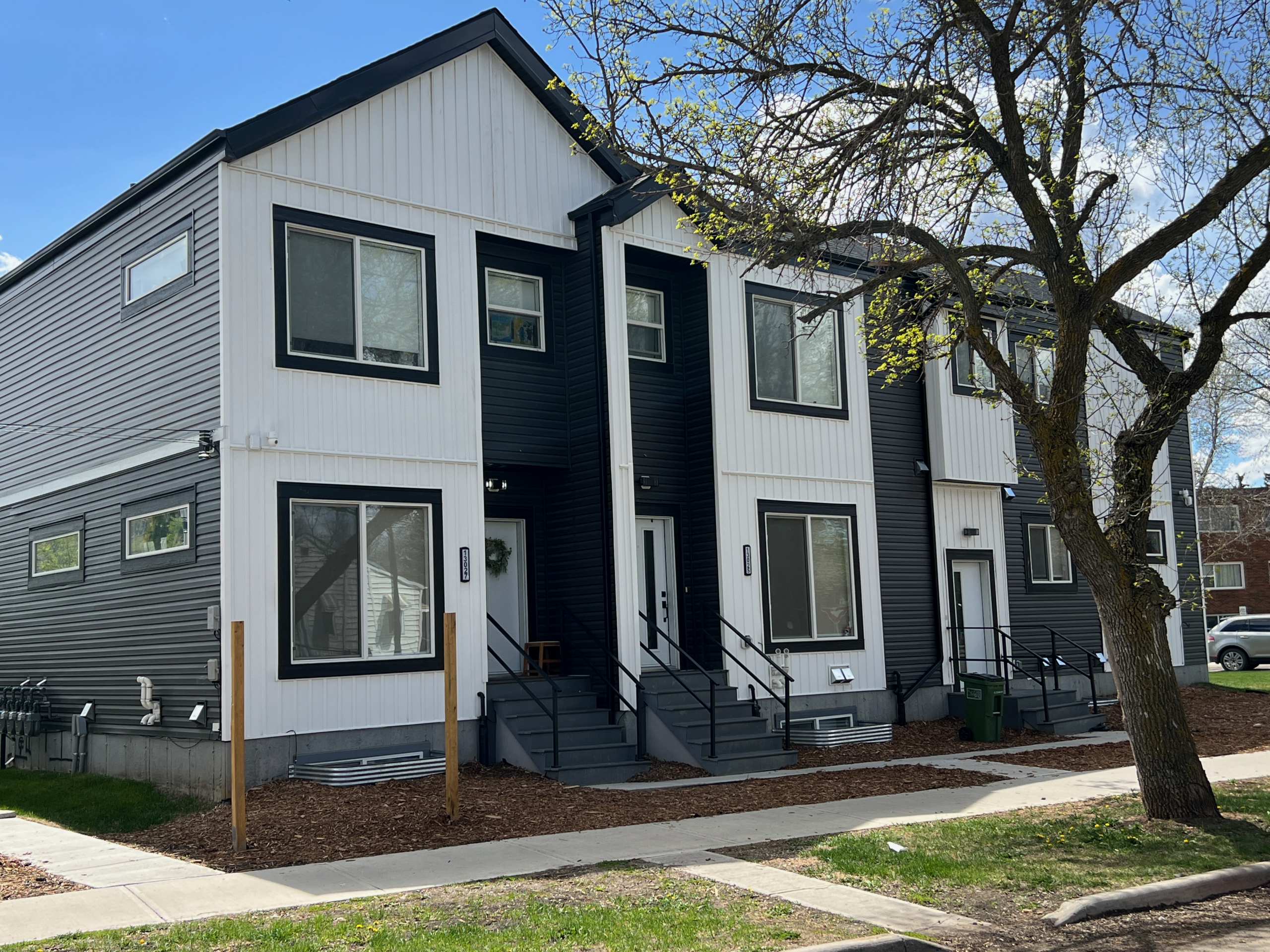
If you’re looking at homes for sale in Inglewood, Edmonton, the first thing worth knowing is that you’re in the right city. Calgary has its own Inglewood, and a generic search will surface Calgary results before Edmonton ones. Edmonton’s Inglewood sits north of Westmount across 118 Avenue, west of Sherbrooke and Prince Charles, and south of the Yellowhead corridor. It is a working-class historic neighbourhood that has held its bones through three eras of growth. I’m Rory O’Shea, REALTOR® with Homes & Gardens Real Estate Ltd., working alongside Bev O’Shea-Thomas. We cover the full mature inner-west corridor, including Inglewood. This page walks you through where it sits, what it costs, what schools you draw, what community amenities you get, and how it compares to the alternatives.
Where is Inglewood in Edmonton, and why does it matter?
Honest answer: the Calgary confusion is real, and it’s worth resolving up-front. Calgary’s Inglewood is the city’s first neighbourhood, founded in 1875. It carries the Inglewood Bird Sanctuary, the Music Mile on 9 Avenue SE, multiple craft breweries, and a long-standing heritage commercial district. Calgary Inglewood is a much bigger SEO entity than Edmonton’s Inglewood, and it dominates the generic “Inglewood” search across most of the country. If you landed here from a generic search expecting Calgary, this isn’t that. If you meant Edmonton, you’re in the right place.
Edmonton’s Inglewood is a different animal. It’s a mature inner-city residential neighbourhood bounded roughly by 118 Avenue on the south, the Yellowhead Trail commercial-industrial frontage on the north, 121 Street on the east, and 124 Street and the Groat Road approach on the west. Westmount sits immediately south across 118 Avenue. North Glenora sits southwest across the Coronation Park ravine. Prince Charles and Sherbrooke sit north and northeast. Glenora, the prestige character neighbourhood, sits two arterials south.
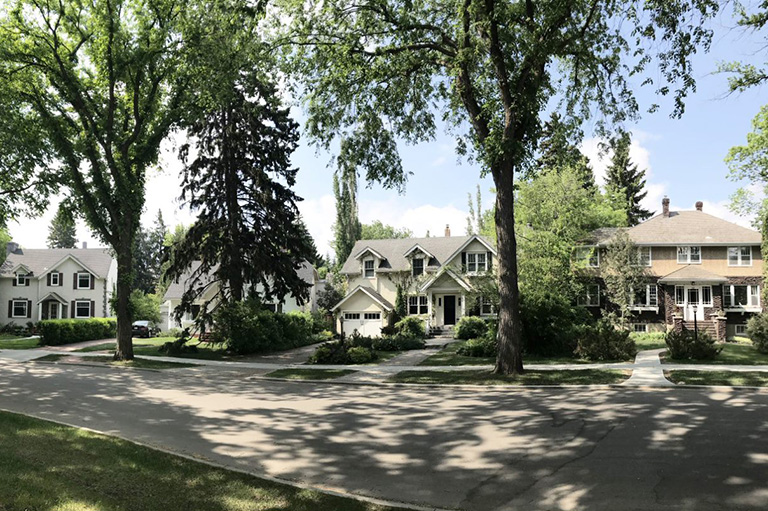
Most people from outside Edmonton don’t realize Edmonton even has an Inglewood. Most people from inside Edmonton do, and they know it as an older grid north of Westmount. The neighbourhood is part of central and mature inner-west Edmonton by every meaningful measure: walkable grid, mature elm canopy, mixed pre-war and post-war homes, and arterial access in every direction.
What’s the price range for homes in Inglewood, Edmonton?
Worth knowing before you fall in love with a house: Inglewood has three markets sitting on top of each other. Most Edmonton neighbourhoods have one dominant era; Inglewood has three. The pre-war character pool, the post-war bungalow pool, and the modern infill pool each carry a meaningful share. A single neighbourhood median averages them out and tells you nothing useful, so here is how the bands break down over the last twelve months.
- Pre-war character one-and-a-half-storey (1910 to 1940): typically $340K to $540K depending on renovation level, lot, and condition.
- Post-war bungalow or 1.5-storey (1945 to 1965): typically $360K to $560K.
- 1960s back-split or split-entry: typically $400K to $600K.
- Modern skinny-home infill (post-2015 build): typically $560K to $800K.
- Modern duplex or semi-detached infill: typically $440K to $640K per side.
- Townhouse and row: thin sales volume; usually $270K to $410K when product comes up.
- Apartment condo and walk-up: typically $150K to $270K, concentrated along 118 Avenue, 124 Street, and 127 Avenue frontages.
Across the detached pool, the 25th to 75th percentile range works out to roughly $390K to $680K, which captures most of what you’ll see in showings. These are estimates; contact Rory for a current CMA on a specific property. Web aggregators sometimes return Calgary Inglewood data on bare “Inglewood” queries, so confirm any price quote you see online is for the Edmonton neighbourhood before you act on it.
Over the twelve months ending May 2026, 71 residential properties sold in Inglewood through the REALTORS® Association of Edmonton MLS® System, with sold prices ranging from $93,000 to $1,690,000. That wide spread reflects Inglewood’s mix of walk-up condominiums along its arterial frontages and a detached pool spanning three housing eras, from pre-war character homes through post-war bungalows to modern infill.
What’s it like to live in Inglewood?
Here’s the trade-off: Inglewood gives you 124 Street amenity proximity, downtown commute proximity, and an established community-league identity, at a price tier below Westmount and well below Glenora. What it does not give you is the stylistic consistency of Glenora or the cohesive post-war character of North Glenora. A single Inglewood block can hold a 1915 character one-and-a-half-storey, two 1955 bungalows, a 1965 back-split, and a 2020 skinny infill pair.
Buyers describe Inglewood as Westmount’s quieter, smaller, slightly more affordable northern neighbour. The description fits. Interior streets are consistently quiet residential, with mature elm canopy and a community-league rhythm that has been continuous since 1928. The 124 Street commercial corridor terminates at 118 Avenue on its north end and is within a short walk for addresses west of 121 Street.
The 121 Street, 124 Street, and 127 Avenue frontages carry arterial traffic. Properties fronting or backing onto them have a different acoustic and air-quality profile than interior streets. Most buyers I show in Inglewood set their preferences for interior streets early; if you back onto an arterial, you accept the trade-off in exchange for a meaningfully shorter price tag.
What community amenities does Inglewood offer?
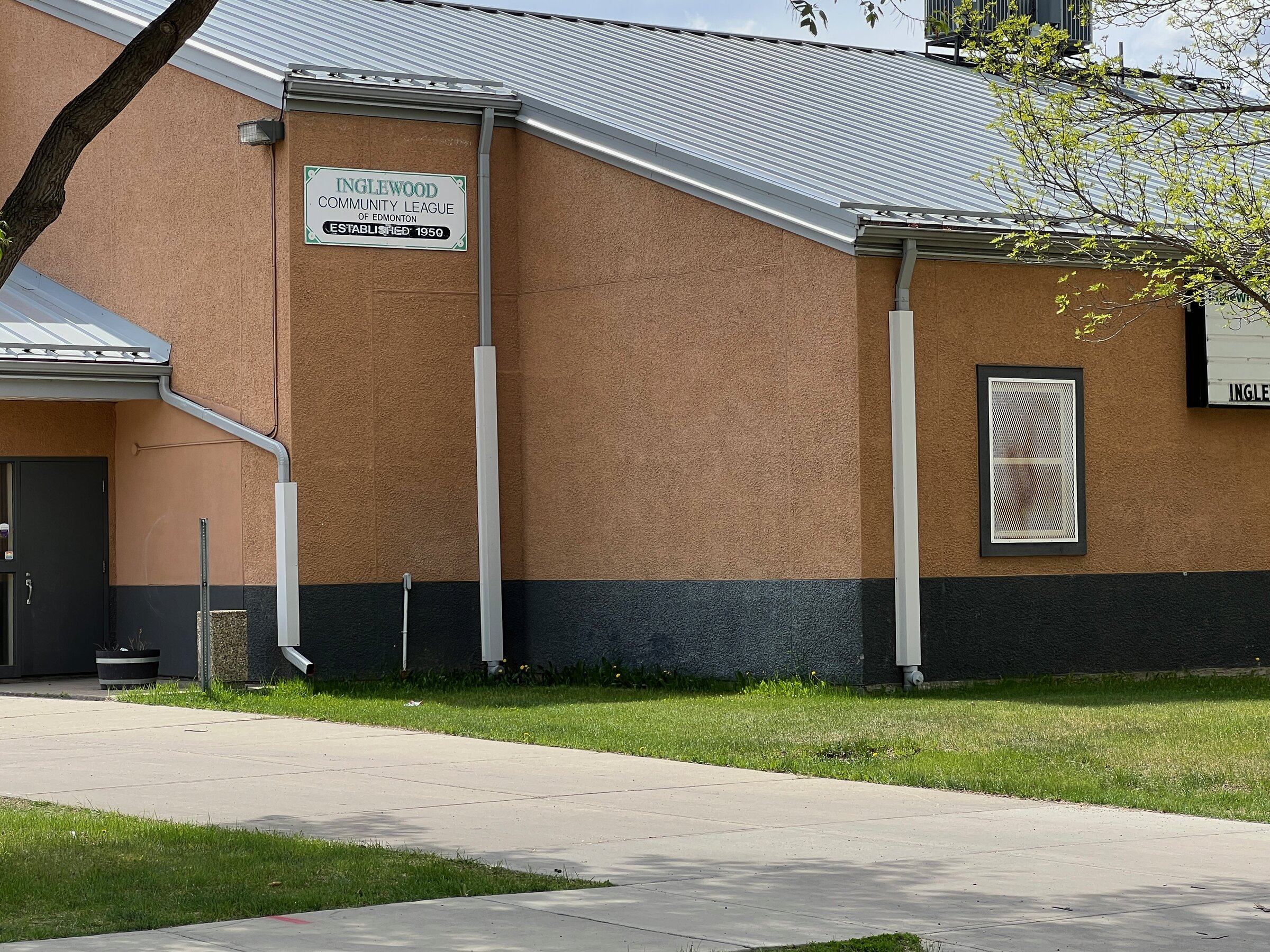
If you’re moving for the community-league rhythm, this is one of Edmonton’s stronger neighbourhoods on the amenity side. The Inglewood Community League, founded in 1928, runs out of its hall on 120 Avenue and is one of the more active community leagues in mature inner Edmonton. Programs typically include youth sports registrations, ice rink operations through winter, hall rentals, and seasonal community events. The league has been continuous through three eras of the neighbourhood, which is itself a useful signal about how Inglewood works at the block level.
Inside the neighbourhood, Inglewood Park serves as the main green space. Coronation Park sits southwest across Groat Road and the ravine system; it carries the Peter Hemingway Fitness and Leisure Centre, the TELUS World of Science, and direct ravine and trail access, all within a 10 to 15 minute drive. Norwood Park and the broader Norwood Boulevard linear park system sit east of the neighbourhood, accessible by a short walk or drive.
For daily-use shopping, the 124 Street commercial corridor (south end at 118 Avenue) is within walking distance for addresses west of 121 Street; Westmount Centre at 111 Avenue and Groat Road is a 7 to 12 minute drive south; and Italian Centre Shop locations sit within 12 to 18 minutes. Verify hours and current operators before you build a routine around any specific business.
What schools serve Inglewood?
If you’re moving for the schools, the catchment story here is one of the stronger ones in mature inner-west Edmonton. Confirm the catchment polygon for your address on epsb.ca before you write an offer, but here is the structure most Inglewood addresses draw.
Edmonton Public Schools (EPSB). Inglewood School (K to 9) sits in the neighbourhood at 12515 116 Street and is the designated school for much of the catchment, with specialty programming worth verifying year over year. Westglen School (K to 9) in the adjacent area serves some overlap addresses. Ross Sheppard High School (Grades 10 to 12) at 13546 111 Avenue serves the high school catchment and hosts the IB Diploma Programme, which draws students from across the mature inner west and is a meaningful draw for Inglewood families with high school-age children. Victoria School of the Arts (K to 12) at 10210 108 Avenue is a program-based admission school, not strict catchment.
Edmonton Catholic Schools (ECSD). St. Andrew and St. Pius X Catholic Elementary Schools in the adjacent area serve most Inglewood Catholic addresses; St. Joseph Catholic High School at 10830 109 Street covers the high school catchment. Verify at ecsd.net.
Francophone and private. No francophone school sits in Inglewood; closest catchments draw to École Gabrielle-Roy or École Père-Lacombe. Tempo School and Edmonton Academy are admission-based private options nearby.
Fraser Institute rankings circulate widely in school discussions, but the methodology is widely debated and does not capture school culture, special needs support, or program diversity. Treat them as one data point among many.
How long is the commute from Inglewood to downtown?
Most people from outside Edmonton don’t realize how close Inglewood sits to downtown. Off-peak, you’re typically looking at 9 to 16 minutes downtown via 124 Street and 107 Avenue, or via Kingsway. The bigger transit story for Inglewood right now is the Valley Line West LRT under construction along Stony Plain Road. The Valley Line sits two arterials south of Inglewood, accessed through Westmount, but the 124 Street and 149 Street stations will be reachable from Inglewood addresses by a short drive or bus connection when service opens. Verify the projected revenue-service date with the City of Edmonton or ETS before you bank a commute plan on it; the project has had multiple schedule revisions.
Other typical drive times, off-peak:
- University of Alberta (main campus): 13 to 20 minutes via Groat Road and Saskatchewan Drive.
- NAIT (the Metro Line LRT terminus): 5 to 10 minutes via 118 Avenue or Princess Elizabeth Avenue.
- West Edmonton Mall: 14 to 22 minutes via 142 Street or 87 Avenue.
- Nisku and the south industrial belt: 26 to 40 minutes via Calgary Trail.
- Edmonton International Airport: 30 to 46 minutes via QEII.
- Royal Alexandra Hospital: 5 to 10 minutes via 111 Avenue and Kingsway.
For cyclists, 118 Avenue has integrated bike lane infrastructure on key cross-streets; Coronation Park access connects to the river valley trail system via Glenora.
Who’s buying in Inglewood right now?
Six buyer profiles show up in Inglewood showings reasonably consistently. The mix tilts toward first-time buyers, renovation buyers, and move-up families more than downsizers, which sets Inglewood apart from North Glenora’s older-skewing buyer pool.
- First-time-buyer young professional or young family. Often renters in Oliver, Downtown, Garneau, Strathcona, or Westmount. Drawn by 124 Street amenity proximity and new-build infill or renovated post-war bungalows at a price point below Westmount infill.
- Renovation buyer. Inglewood’s trimodal stock gives the renovation buyer more options than the bungalow-dominant North Glenora. Pre-war character homes take a respectful renovation very well; post-war bungalows take a main-floor open and basement development very well.
- Move-up family from north-of-river rentals or starter condo. Looking for the Ross Sheppard catchment at a price tier below Westmount, with the community-league belt within walking distance.
- Downsizer from mature west and Central (Glenora, Crestwood, North Glenora). Looking for lock-and-leave on a smaller renovated bungalow or small infill at a price tier below Glenora.
- Investor or small landlord. Inglewood has a longer history of investor-buyer activity than North Glenora, particularly on original-stock bungalows along the arterial frontages that cash-flow at the entry-level price band.
- Long-tenure original-owner cohort selling estate or for downsizing. The 1950s and 1960s owner cohort is rolling out; the pre-war cohort that remains is even longer-tenure. This group generates a meaningful share of annual supply.
If your budget is under $400K, you’re mostly looking at the condo side along the arterial frontages or at the entry of the original-bungalow band on smaller or less-renovated stock. Most Inglewood detached activity sits above $420K and below $720K.
What infill construction is happening in Inglewood?
Less intense than Westmount, but materially present. Inglewood carries continuous single-lot redevelopment, particularly on blocks fronting 122 Avenue and 123 Avenue. Most projects are skinny-home pairs on split pre-war lots; some are detached infill on full lots; the duplex and semi-detached share has grown over the past five years.
The 2024 City of Edmonton Zoning Bylaw renewal expanded the small-scale residential category city-wide, so expect modestly accelerated infill activity going forward. The character impact will land slower here than in higher-velocity neighbourhoods like Westmount or Ritchie. Pull current building permit counts from the City of Edmonton open data portal if you want hard numbers for a specific block.
Active local builders in this area include Sable Homes, Effect Home Builders, and City Homes Master Builder, plus smaller custom shops. Confirm current activity before you commit to any builder; the Edmonton infill builder roster turns over more than buyers expect.
The Valley Line West LRT is the regional infrastructure story affecting Inglewood indirectly through improved south-and-west transit access, not an Inglewood-internal project.
What should buyers know about older Inglewood homes?
Honest answer: more than you would think if you have only bought in newer Edmonton suburbs. Inglewood has a larger pre-war stock share than North Glenora, and pre-1960 homes come with a checklist. A standard pre-purchase inspection mitigates most of this; you just need to know what to ask the inspector to look at closely.
- Knob-and-tube wiring. More common in pre-1940 homes. Many Inglewood pre-war homes have had partial or full electrical upgrades; some still have legacy wiring in attic spaces or behind unrenovated walls. Insurance underwriters increasingly flag this; verify before you firm up financing.
- Original foundations. Pre-1955 foundations were poured against different drainage standards. Look for moisture management evidence: weeping tile age, sump pump presence, basement floor cracking. The mature elm canopy is part of Inglewood’s character; tree roots near foundations are real.
- Asbestos, lead paint, galvanized plumbing. Common in original finishes and water-service lines. Not deal-killers; budget line items.
- Heating system age. A furnace 25 years old works fine until it doesn’t; budget for replacement on the older end of the original-stock pool.
- Dutch elm bylaw. Inglewood sits within the City of Edmonton elm protection area, with a no-pruning window typically April through September. Verify the current bylaw before any major tree work.
None of this is a deal-killer. Inglewood pre-war homes are buyable, livable, and often renovated. They just take a more careful inspection than a 2010-era house in Windermere.
How does Inglewood compare to Westmount, North Glenora, and the inner-west?
This is the comparison conversation I have at most kitchen tables. If you’re weighing Inglewood against the alternatives, here is how the close substitutes stack up.
- Westmount (closest substitute). South across 118 Avenue. Comparable price band, higher pre-war character share, more active infill scene, direct adjacency to 124 Street. The natural lateral move for an Inglewood buyer who wants more 124 Street walk-up amenity.
- North Glenora (sibling step-laterally). Southwest across 118 Avenue and Groat Road. Higher post-war bungalow share than Inglewood’s trimodal mix, quieter interior-street feel, Coronation Park amenity belt access.
- Prince Charles (step-down on price). Northeast of Inglewood. Comparable post-war character, slightly lower price band on equivalent product, less amenity proximity. A budget-flexible Inglewood buyer should also see Prince Charles.
- Sherbrooke (step-down north). Similar post-war bungalow stock, slightly lower price band, less amenity proximity. Worth a look if the budget is tight.
- Alberta Avenue and Spruce Avenue (step-down east). Comparable pre-war character stock, similar price tier on the entry of that band, more 118 Avenue commercial frontage exposure on the east end.
- Coronation and Woodcroft (budget-flexible alternative). Across Groat Road and 118 Avenue. Lower price tier but a step-out on character coherence.
Step-up. Glenora. South across Stony Plain Road and Westmount. Significantly higher price tier, much heavier pre-war character architecture share, larger lots on average, prestige school cohort. If your budget pushes past $700K and you want a prestige character home, Glenora is the page to read next.
About the Author
Rory O’Shea is a REALTOR® with Homes & Gardens Real Estate Ltd. in Edmonton. He covers the full residential market, from apartment condos starting at $200K through detached homes to $1.2M+, across Edmonton and 11 surrounding municipalities. Rory works alongside Bev O’Shea-Thomas, a 45+ year Edmonton REALTOR® and Re/Max Hall of Fame member who provides advisory support. Reach Rory at 780-220-4490 or rory@edmontoncityhomes.com. Homes & Gardens Real Estate Ltd., 3659 99 St NW, Edmonton, AB T6E 6K5.
Market figures shown as ranges; actual prices depend on home size, condition, and exact location. For a current CMA on a specific property, contact us. Listing data is provided through the REALTORS® Association of Edmonton MLS® System and is believed reliable but not guaranteed. Verify current status with your REALTOR®.
Talk to Rory
If you’re looking at homes for sale in Inglewood, Edmonton and want a working view of what is available, what is about to come up, and where the value sits across the pre-war, post-war, and infill pools, I’m happy to talk. I can run a current CMA on a specific Inglewood address, walk you through the school catchment chain in person, or compare Inglewood side-by-side with Westmount, North Glenora, Prince Charles, or Glenora before you commit. Call or text me at 780-220-4490, email rory@edmontoncityhomes.com, or use the contact page to send a brief. Learn more about Rory and Bev.
About this page
This page was researched and drafted with AI assistance to gather and synthesize public data from the Realtors Association of Edmonton, Statistics Canada, CMHC, and the City of Edmonton. Local market commentary and neighbourhood observations reflect the direct experience of Rory O’Shea and Bev O’Shea-Thomas working this market — Bev’s 45+ years of Edmonton real estate experience and Rory’s front-line transaction work. Every figure, claim, and recommendation was reviewed and signed off by Rory before publishing.
Last reviewed: May 26, 2026