
Key Takeaways
- Oliver, officially renamed Wîhkwêntôwin, is Edmonton’s most densely populated neighbourhood, immediately west of downtown.
- Per the REALTORS® Association of Edmonton, 372 homes across all residential property types sold here in the year to July 30, 2026, with a median of $176,250 and a median 42 days on market. Confirm current pricing with Rory before you write an offer.
- The bottom of the sold range reflects titled parking stalls and storage units, which trade on MLS here. See the price section before you read anything into it.
- Mostly apartment condominiums across a wide age range, from walk-ups to modern towers, with a wide spread in building quality.
- The strongest walkable-urban value in Edmonton, with 124 Street and the river valley on either side.
- The building matters more than the neighbourhood. Read the condominium documents before you write.
Homes for sale in Oliver
 Courtesy of Jason A Thomas, Royal Lepage Summit Realty$200,000#403 10046 110 ST NW2 bd · 2 full ba · 842 sq ft · MLS® # E4502521
 Courtesy of Tyler J Ellis, Real Broker$135,000#706 9930 113 ST NW1 bd · 1 full ba · 612 sq ft · MLS® # E4502304
 Courtesy of Mauricio Niemeyer, Liv Real Estate$135,000#405 10011 116 ST NW2 bd · 1 full ba · 1,141 sq ft · MLS® # E4487754
 Courtesy of Ian Elliott, Exp Realty$144,900#301 10335 117 ST NW2 bd · 1 full ba · 1,042 sq ft · MLS® # E4502135
 Courtesy of Rick A Conlon & Brianna R Warwick, RE/MAX Real Estate$325,000#1203 10025 113 ST NW2 bd · 2 full ba · 1,321 sq ft · MLS® # E4502245
 Courtesy of Susan Rehacek, Tactic Realty$149,900#406 9816 112 ST NW1 bd · 1 full ba · 688 sq ft · MLS® # E4502184
If you’re looking at homes for sale in Oliver, Edmonton, you’re looking at the densest, most walkable neighbourhood in the city, and at a market where two apartments in the same block can be very different purchases. I’m Rory O’Shea, REALTOR® with Homes & Gardens Real Estate Limited, working alongside Bev O’Shea-Thomas. This page covers what sold, what the numbers actually mean, and what separates a good buy here from a bad one.
Where is Oliver in Edmonton?
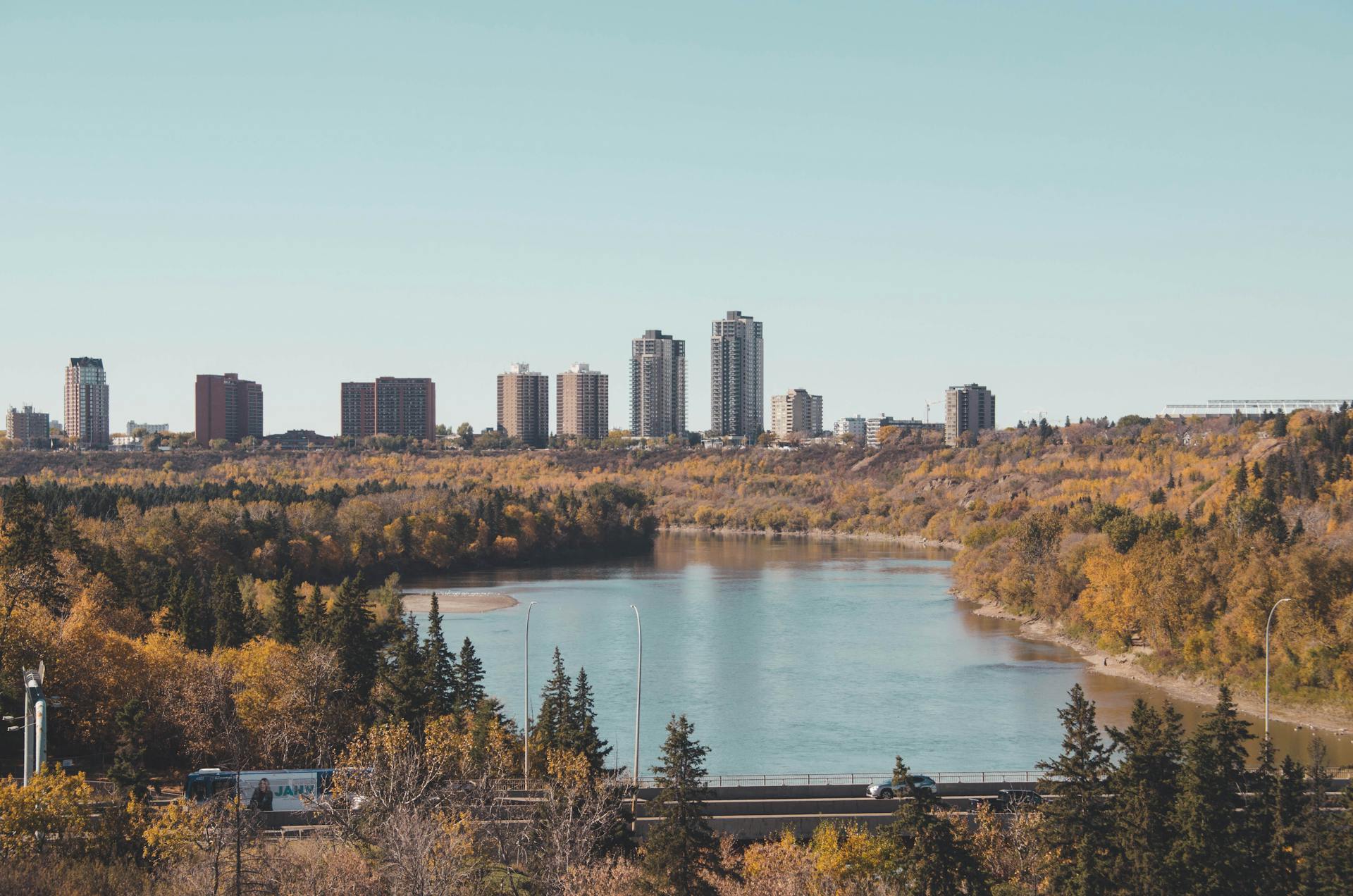
Oliver sits immediately west of downtown, between the river valley on the south and the arterial corridors on the north, running west toward 124 Street.
A note on the name. The neighbourhood was officially renamed Wîhkwêntôwin. Most buyers still search for Oliver, most residents still say Oliver, and the MLS and the City are not always in step on which name appears where. Both names refer to the same place, and you’ll see both on listings. I use Oliver on this page because that’s what people are searching, and Wîhkwêntôwin because that’s the official name of the neighbourhood.
I’ve deliberately kept this short rather than summarizing the history behind the change, because it deserves to be told accurately or not at all, and I’d rather point you to the City of Edmonton’s own material than paraphrase it here.
What’s the price range for homes in Oliver?
Across all residential property types, sales here ran from $15,000 to $2,350,000 in the year to July 30, 2026, with a median of $176,250.
That $15,000 figure needs explaining before it misleads you, and it’s the reason this section leads with it. Titled parking stalls and storage units trade on MLS in this neighbourhood, the same way suites do, and they show up in the same sold report. The bottom of that range is almost certainly one of those, not a residence. Nobody bought a home in Oliver for fifteen thousand dollars. The median of $176,250 is the number that describes what people actually live in.
| Measure | All residential property types |
|---|---|
| Homes sold (12 months) | 372 |
| Sold price range | $15,000 to $2,350,000 |
| Median sold price | $176,250 |
| Average sold price | $225,312 |
| Median days on market | 42 |
At 372 sales this was the busiest of the five Edmonton communities we pulled that month, which tells you something useful on its own: there is real liquidity here. Things trade.
These are estimates; contact Rory for a current CMA on a specific property.
What’s it like to live in Oliver?
Better street life than downtown, and that’s the honest reason most people choose it over its neighbour. You get 124 Street on one side with its independent restaurants and galleries, the river valley on the other, quiet residential blocks in between, and enough density to keep it all in business.
It’s the closest thing Edmonton has to a neighbourhood where you genuinely don’t need a car. That’s the real product here, and the price of entry for it is low.
The trade-offs are age of building stock, parking, and noise on the arterial corridors. None of them is a reason to rule it out. All of them are reasons to choose carefully.
What kinds of homes are in Oliver?
Almost entirely apartment condominiums, spanning three-storey walk-ups from the 1960s and 1970s through 1980s concrete towers to recent builds. There is very little detached stock.
The age spread is wider here than almost anywhere in the city, and it maps directly onto price. The low end of the residential market is the older walk-up stock; the high end is newer towers and larger suites.
What should buyers know about buildings in Oliver?
If you take one thing from this page, take this: in Oliver, the building matters more than the neighbourhood.
The 1960s to 1980s stock ranges from well-run buildings with healthy reserves to buildings that have deferred major work for years. Two units at the same price, on the same street, can carry completely different risk. What separates them is documentation, not appearance.
Before you write an offer:
- Read the reserve fund study and check when it was last updated.
- Read the estoppel certificate for the specific unit.
- Ask about special assessments in the last five years and any contemplated.
- Confirm whether the parking stall is titled or assigned, because that changes what you own and what you can sell later.
- Ask what the monthly fee has done over five years, not just what it is now.
I’ll read these with you. At a $176,250 median, a special assessment is not a small line item.
What schools serve Oliver?
Oliver is served by Edmonton Public Schools and Edmonton Catholic Schools, with francophone options through Conseil scolaire Centre-Nord.
I’m not printing a catchment here. Central catchments shift, and a page that lists a school confidently will be wrong eventually. Ask me and I’ll confirm the current designation for a specific address. As with downtown, most buyers here aren’t buying for schools, and I’d rather say that than pad the section.
How is the commute from Oliver?
Excellent, and for many residents the answer is that they walk. Downtown is minutes away on foot from the eastern half of the neighbourhood. The LRT runs along the eastern edge, bus service is dense along the main corridors, and the University of Alberta and NAIT are both short trips.
One practical note: the neighbourhood is long east to west, and the 124 Street end is a real walk from the nearest LRT station. If transit is central to how you live, check the specific address rather than the neighbourhood.
Cycling connects to the downtown protected network and to the river valley trails.
What’s nearby?
124 Street is Oliver’s western spine and the reason the neighbourhood feels different from downtown: independent restaurants, galleries and small shops at street level, with residential immediately behind. The river valley sits on the south edge with trail access.
The Brewery District on the north side is funky in the good way, pubs and shops, and it’s a nice place to spend a summer day rather than somewhere you drive to for a single errand. There’s large-format retail including grocery there too.
I’m not publishing a business list, because turnover on 124 Street is real and a stale list helps nobody. Ask me what’s open and worth your time right now.
Who’s buying in Oliver right now?
Young professionals, first-time buyers, downsizers who want walkability without downtown’s street environment, and investors.
The most common comparison I’m asked to make is Oliver against downtown. They’re close enough in price that the decision isn’t really about budget. It’s about whether you want the arena and the towers, or the coffee shops and the quieter residential blocks. Most people know which one they are within about ten minutes of walking both.
What should buyers know before moving to Oliver?
- The building, not the neighbourhood. Read the documents.
- Titled or assigned parking, confirmed in writing.
- Which end you’re on. The 124 Street end and the 109 Street end are different experiences.
- Fee history over five years, not today’s number.
- Walk it. This neighbourhood sells itself on foot better than on paper.
How does Oliver compare to nearby neighbourhoods?
- Downtown. Immediately east, similar product, more towers and less street life.
- Garneau and Strathcona. Central and walkable with more character stock at a higher entry price.
- Glenora (step up). Directly west, and the natural move for a buyer who wants a house in the same part of the city.
Browse all of our Edmonton communities to see how the central pages connect.
About the Author
Rory O’Shea is a REALTOR® with Homes & Gardens Real Estate Limited in Edmonton. He covers the full residential market, from apartment condos through detached homes, across Edmonton and 11 surrounding municipalities. Rory works alongside Bev O’Shea-Thomas, a 45+ year Edmonton REALTOR® who provides advisory support. Reach Rory at 780-220-4490 or rory@edmontoncityhomes.com. Homes & Gardens Real Estate Limited, 3659 99 St NW, Edmonton, AB T6E 6K5.
Market figures shown are sourced, dated and attributed; actual prices depend on home size, condition, and exact location. For a current CMA on a specific property, contact us. Listing data is provided through the REALTORS® Association of Edmonton MLS® System and is believed reliable but not guaranteed. Verify current status with your REALTOR®.
Talk to Rory
If you’re looking at homes for sale in Oliver, the highest-value thing I can do for you is read a building’s condominium documents before you commit, because that’s where the difference between a good buy and an expensive mistake actually shows up. I can also run a current CMA on a specific address, or walk you through Oliver against downtown so you can feel the difference. Call or text me at 780-220-4490, email rory@edmontoncityhomes.com, or use the contact page. You can also start a home valuation or learn more about Rory and Bev at Homes & Gardens Real Estate Limited.